
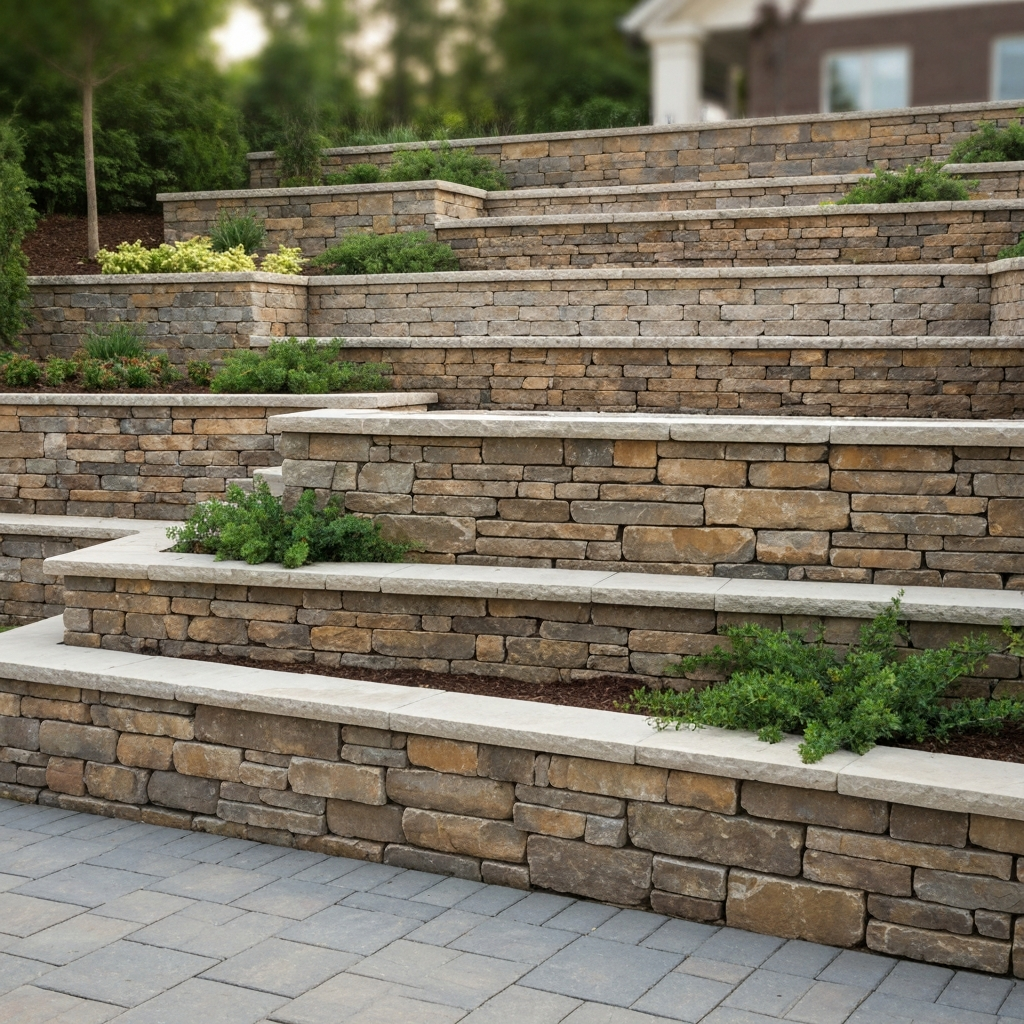
Retaining Walls in Oakland & the East Bay
Structural stone and block walls to manage slopes and create level terraces.
Service Overview
Expert Retaining Walls
In the hilly terrain of Oakland and Berkeley, retaining walls are essential for creating usable, level outdoor spaces and preventing soil erosion. We build structural walls that are engineered to last and designed to look beautiful.
Retaining walls require serious expertise. With 30+ years of landscaping experience, John Reppard and his local Oakland crew understand the soil dynamics of the East Bay. As a licensed contractor for the past decade, we ensure every wall has the proper drainage and structural integrity to stand the test of time. Read our guide: <a href='/blog/retaining-wall-permit-oakland-east-bay' class='text-[#1E3D2F] font-bold underline hover:text-[#D9A441] transition-colors'>Do You Need a Permit for a Retaining Wall in Oakland & the East Bay?</a>
What's Included
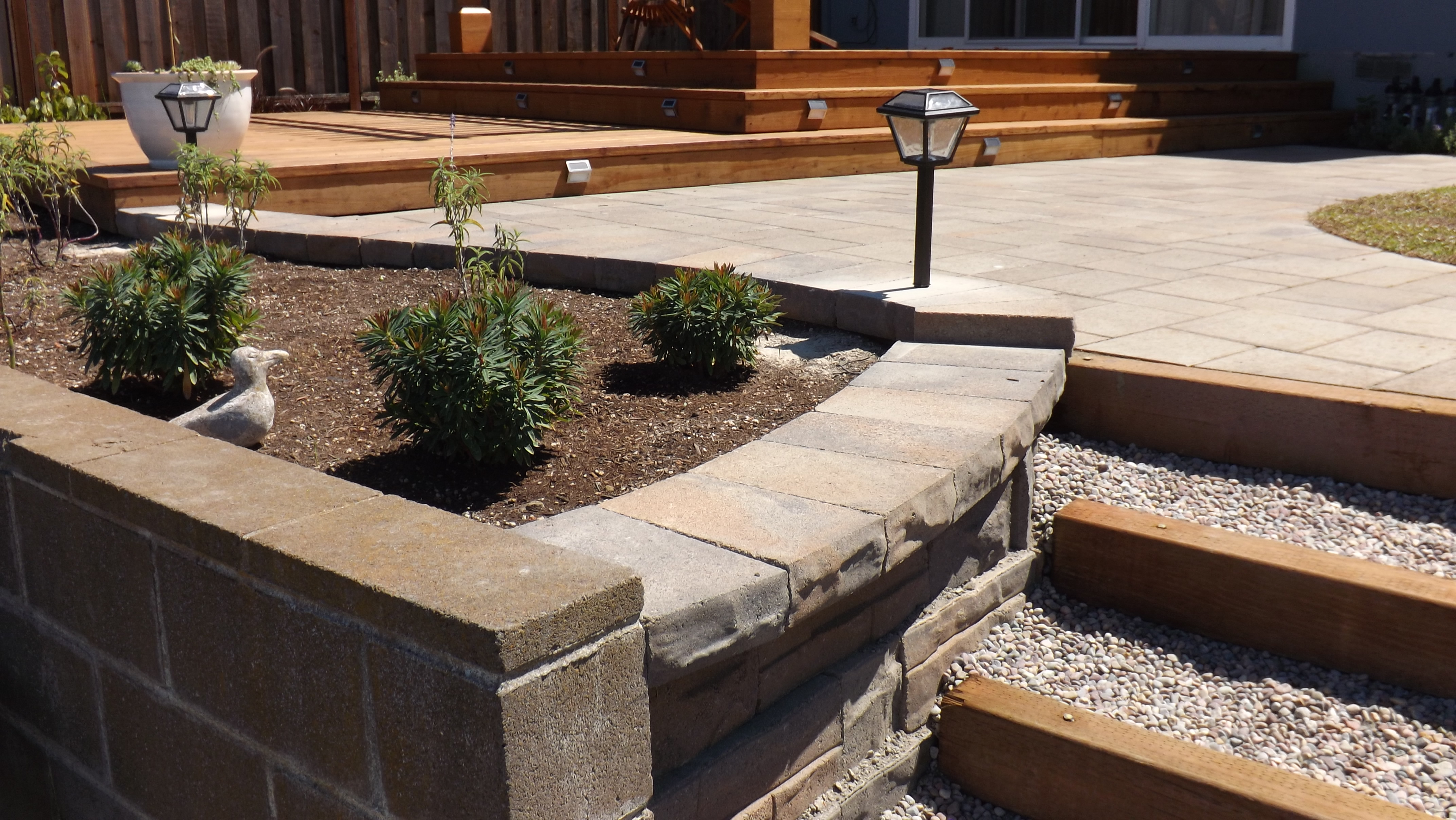
- Interlocking block and natural stone walls
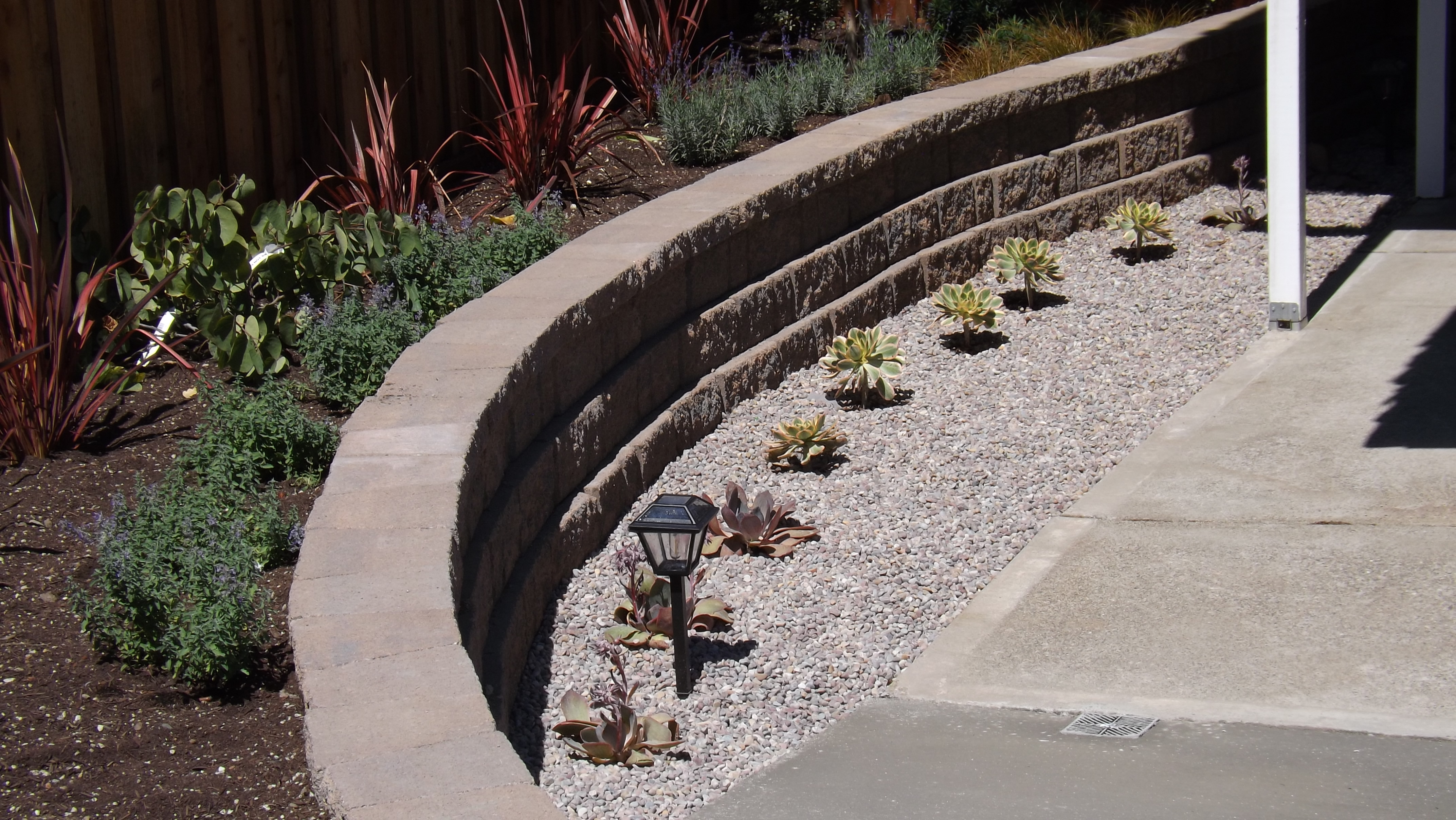
- Hillside terracing and slope management
- Comprehensive drainage solutions behind walls
- Proper base compaction and leveling
- Integration with stairs and planting beds
Our Process
How We Work
Consultation & Estimate
We assess the slope, discuss your goals, and provide a free estimate.
Engineering & Permitting
For walls over 3 feet, we coordinate necessary engineering and city permits.
Excavation & Build
We excavate the site, install proper drainage, and build the wall course by course.
Final Walkthrough
We review the completed structure to ensure it meets all safety and aesthetic standards.
Homeowner Tips
Retaining Wall Care & Drainage
A well-built retaining wall handles our wet winters with ease — but a few annual checks protect your investment and catch small issues before they become structural ones.
Keep weep holes clear after wet winters
After each rainy season (typically April–May), inspect the base of your retaining wall for weep holes or outlet pipes. These drain the gravel zone behind the wall and relieve hydrostatic pressure. If they're blocked by sediment or debris, clear them with a garden hose. A blocked weep hole can cause water pressure to build to wall-damaging levels in the next rain cycle.
Watch for bulging or leaning on hillside lots
Walk along the face of your retaining wall each fall before rain season starts. A healthy wall is plumb and uniformly flat. Any noticeable outward lean or a curved bulge in the middle of a panel is a warning sign of drainage or footing failure. These problems are fixable when caught early but can require full wall replacement if ignored.
Keep aggressive roots away from the wall base
Tree and large shrub roots can penetrate behind or beneath a retaining wall and cause block displacement over years. Avoid planting large trees within 6–8 feet of a retaining wall. If roots are already approaching, root barriers can be installed to redirect growth away from the structure.
Check the drainage channel at the base of slopes
If your wall is part of a terraced hillside, verify that any swales or drainage channels at the toe of the slope remain clear after leaf fall. Blocked drainage forces water to back up against the wall base, saturating the soil and increasing pressure on the structure far beyond its design load.
If you notice any movement, cracking, or drainage issues, that's a job for a licensed contractor — give us a call. Get a free estimate →
Why Choose Us
The Reppard's Difference
Licensed & Insured
CA Contractor License #1022906. We operate with full licensing and insurance for your peace of mind.
30+ Years Experience
Decades of hands-on landscaping experience navigating East Bay microclimates and soil conditions.
Local Oakland Crew
Our dedicated team is local to the area, ensuring reliable communication and consistent quality.
FAQ
Common Questions
Get Started
Request Your Free Estimate
Tell us about your retaining walls project and we'll be in touch shortly.